What Is TPO Roofing?
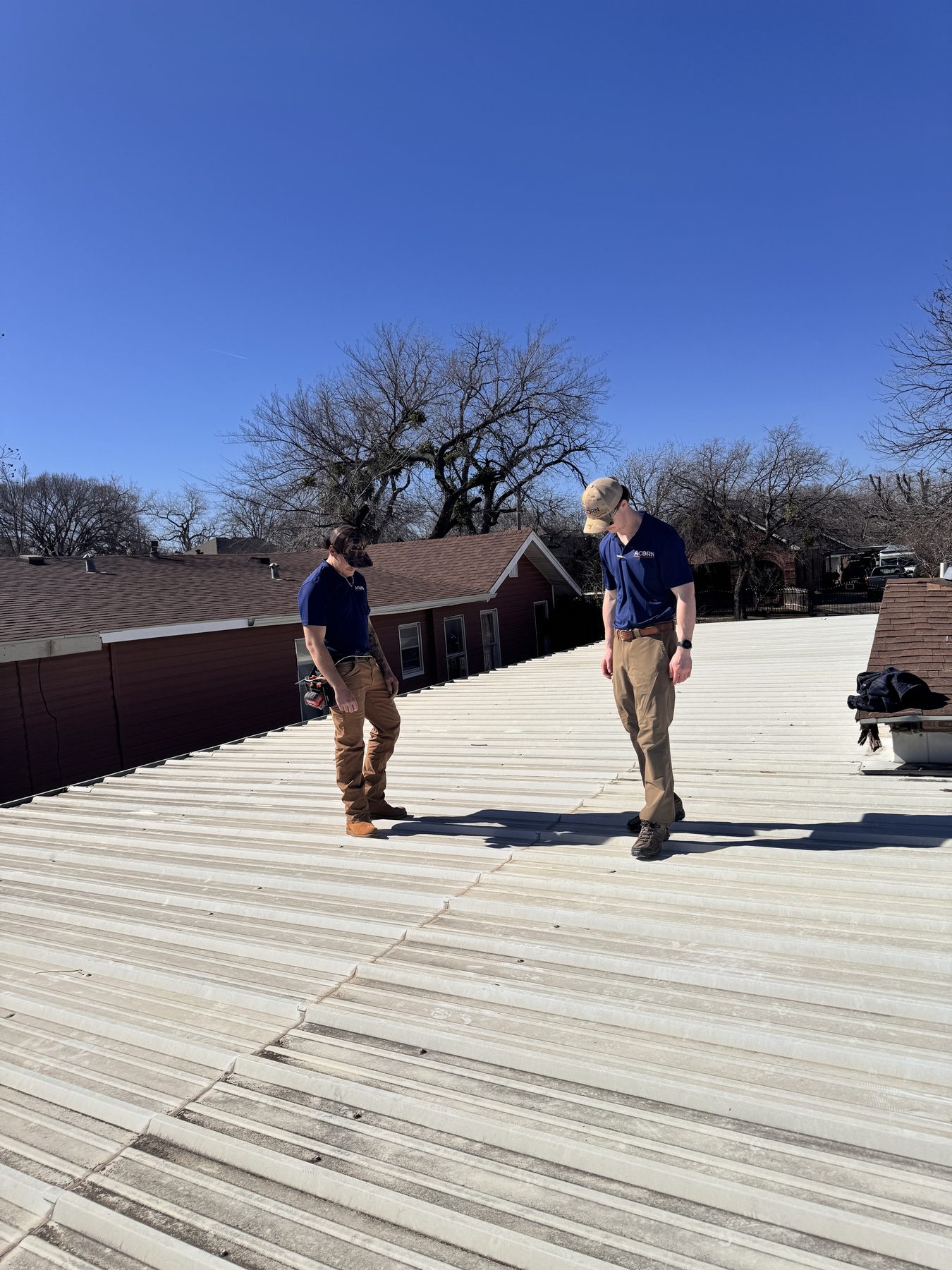
TPO is thermoplastic polyolefin: a single-ply membrane, almost always white, heat-welded at the seams rather than glued. It is the default specification on commercial low-slope roofs across Dallas-Fort Worth, and the reason is largely the colour.
Why White Matters Here
A reflective membrane sends solar gain back off the building instead of into it. On a large flat roof over conditioned space in a Texas summer, that shows up on the utility bill and it reduces load on rooftop HVAC. It is the clearest reason TPO overtook older dark-surface systems in this climate.
How We Install It
- Survey and measure, including checking where the roof currently holds water
- Insulation layer, tapered where drainage needs correcting rather than just re-covering a ponding roof
- Membrane laid and heat-welded, since welded seams are stronger than the sheet either side of them
- Flashings, edge metal and penetration detail — where nearly all failures actually begin
Benefits Of TPO Roofing In Dallas
Fifteen to twenty years of service life, high solar reflectance, resistance to tears, punctures and chemical exposure, no algae growth, and recyclability at end of life. Welded seams give it a genuine advantage over adhered systems, which fail at the joins first.
TPO Or PVC?
A real question rather than a marketing one. TPO costs less and performs well in most commercial applications. PVC handles grease and chemical exposure better, which makes it the right answer over restaurant kitchens, plant rooms and anywhere with oily exhaust. If your roof has neither, TPO is usually the better value.
Repair And Maintenance
TPO is repairable, and a punctured membrane is a patch rather than a re-roof. What kills these roofs is neglect: blocked drains, penetrations never resealed, and trapped moisture under the insulation doing damage with no interior sign. See commercial roofing for maintenance plans.