Most people do not think about their guttering until water is coming over the front of it. By that point the problem has usually been building for a season or two, and the damage it causes is almost never to the gutter itself. It is to the fascia behind it, the siding under it, and the soil against the foundation.
Dallas is hard on gutters specifically. Long dry spells, then an inch of rain in twenty minutes, plus hail that dents and splits aluminium more readily than it damages roofing. Here is what to watch for.
1. Water Spilling Over The Edge
The most obvious sign, and the most commonly ignored. Overflow means water is arriving faster than the system can move it, which is either a blockage, a run that is undersized for the roof area feeding it, or fall that has drifted out of true.
Clear the debris first. If it still overflows on a clean gutter, the sizing or the slope is wrong and no amount of cleaning fixes that.
2. Sagging Or Pulling Away From The Fascia
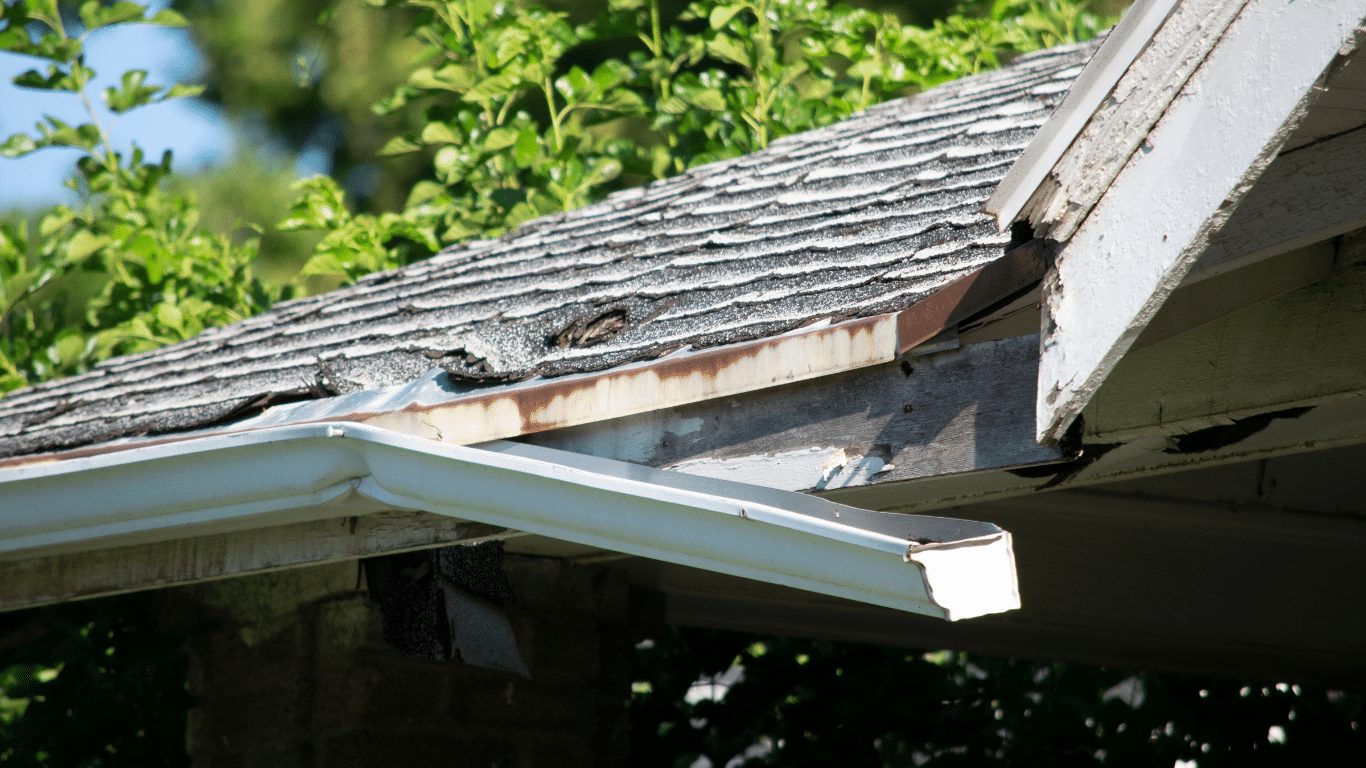
A gutter full of water is heavy. Add a blockage and rusted hangers and the run starts to pull off the fascia board. Left long enough, the fascia rots and the repair stops being a gutter job.
3. Rust Streaks Or Peeling Paint
Both mean water is sitting somewhere it should be moving through. The coating breaks down, then the metal underneath goes. Seamless aluminium is the usual upgrade here because there are far fewer joints to fail.
4. Pooling Water At The Foundation
This is the expensive one. Dallas sits on clay, and clay swells and shrinks with moisture. Water dumping at the base of a wall drives exactly the soil movement that cracks foundations.
Downspouts should discharge five to ten feet from the house. The EPA's guidance on moisture control makes the same point about grading and drainage: get the water away from the structure before it can do anything.
5. Cracks And Splits In The Channel
Between summer heat, winter cold snaps and hail, gutter material expands, contracts and takes impacts. Hairline cracks can be sealed. Anything wider is a replacement of that section, because a sealed split will open again at the next temperature swing.
6. Mould Or Mildew At The Roofline
Green, grey or black growth along the siding under a gutter means water is running down the wall instead of through the system. Clean it, but treat the cause. The CDC notes that mould exposure can cause health problems, so this is not purely a cosmetic issue.
7. Water Stains Inside The House
Stains on a ceiling or upper wall can trace back to the gutter rather than the roof, particularly where the gutter meets the roof edge. Water backing up under the shingle course at that junction is a classic cause of a leak that looks like a roof problem.
8. Missing Or Detached Downspouts
Check after every significant storm. A downspout that has come off is doing nothing at all, and the water it should be carrying is going straight down the wall.
9. Separating Seams
Drips at the joins mean the sealant has given up or the sections are working apart with temperature movement. You can reseal, but if it keeps recurring, seamless guttering removes the joints entirely.
10. Erosion And Landscape Damage
Mulch washing out and channels forming in beds under the roofline both mean water is being dropped right at the house instead of carried away. That is a drainage problem showing up in the garden before it shows up in the foundation.
When To Replace Instead Of Repair
There is a point at which patching stops making sense. We would recommend replacement when:
- More than about a quarter of the system is rusted, split or failing
- You are resealing or rehanging sections more than once a year
- The guttering is twenty years or older and sectional rather than seamless
On material: aluminium is light, rust-resistant and the sensible default here. Copper looks superb and costs accordingly. Vinyl is cheap and does not enjoy a Dallas summer.
Getting It Looked At
We inspect guttering as part of every roof inspection, because the two systems fail together more often than not, and a storm that damages one has usually damaged the other. If you want it looked at on its own, that is fine too, and it still costs nothing.
More on what we do: gutter repair and installation, or gutters in Dallas specifically.
Not Sure What Your Roof Needs?
We will come out, photograph the whole roof and tell you plainly what it needs, whether that is a repair, a replacement or nothing at all. Free, and with nothing riding on it.
Call (214) 437-7353Sources: EPA, Moisture Control Guidance · CDC/NIOSH, Mold and Health